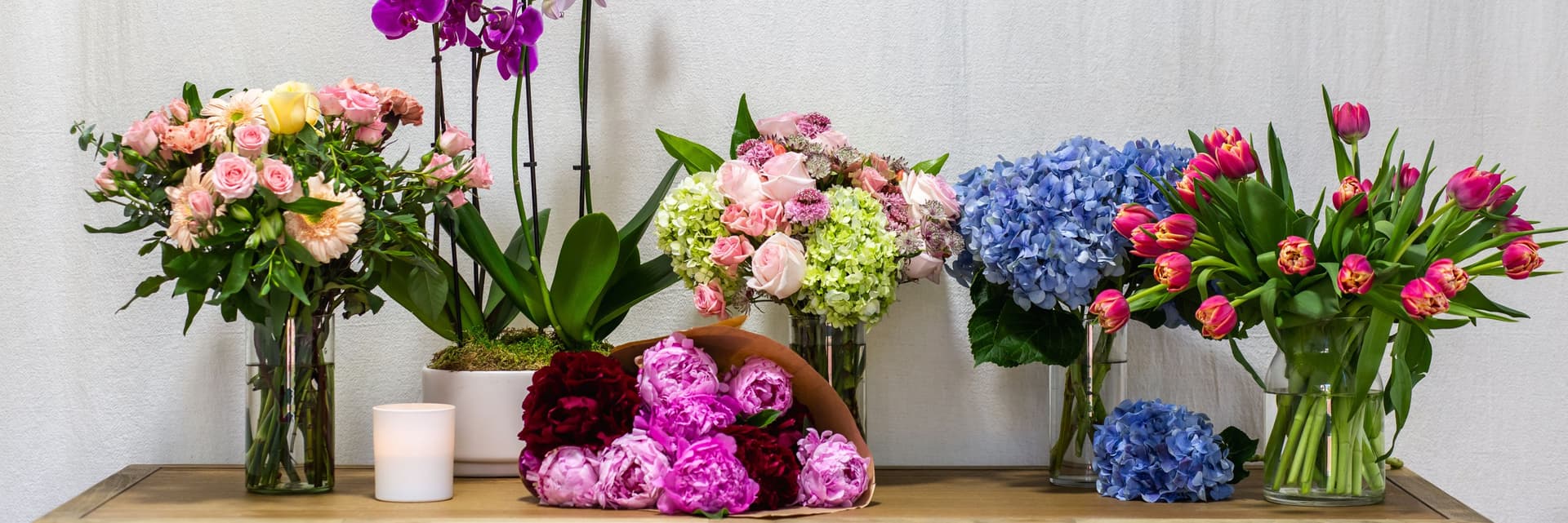
The season’s in full bloom | SHOP THE SPRING BLOOMS

The season’s in full bloom | SHOP THE SPRING BLOOMS

Tulip Care Guide: Why Your Tulips Keep Drooping (and How to Fix It)

A vibrant mix of pink and purple tulips arranged elegantly on a light marble surface.
View Tulip Bouquets

Tulips are one of the few cut flowers that keep growing after they have already been cut, which is exactly why they confuse so many people.

Connect. Follow. Share the Love.

You bring home a bouquet that looks tidy and upright, place it in water, and by the next day the stems are leaning, curving, and drooping in ways that feel almost dramatic. It looks like something has gone wrong. In many cases, though, your tulips are not dying. They are still responding to light, temperature, and water as if they are very much alive and still in motion.

You bring home a bouquet that looks tidy and upright, place it in water, and by the next day the stems are leaning, curving, and drooping in ways that feel almost dramatic. It looks like something has gone wrong. In many cases, though, your tulips are not dying. They are still responding to light, temperature, and water as if they are very much alive and still in motion.

Bright pink tulips in a glass vase, adding a cheerful touch to a stylish living room decor.

Purple Peony Tulips

SHOP

That is the mystery at the center of tulip ownership. Most people expect cut flowers to slowly fade in place. Tulips do not behave that way. They stretch, bend, and shift direction, often continuing to grow after they reach your home. For first-time flower owners, that movement can feel like failure. For anyone who understands tulips, it is simply part of their personality. The challenge is not stopping them from being tulips. It is learning how to guide that behavior so the arrangement stays fresh and beautiful longer. This is where expectations need to change. A tulip bouquet does not reward the same care routine you might use for roses or sunflowers. Warm water, overfilled vases, direct sun, and myth-based fixes can make these flowers collapse faster. Even a well-meant trick, like dropping a penny into the vase, tends to distract from the real solutions. Tulips respond best to cool conditions, clean cuts, and disciplined water habits, especially in warm homes where heat builds up quickly.

The good news is that tulips are not difficult once you know what they are doing. In fact, they are one of the most satisfying flowers to care for because small adjustments create visible improvements. A colder room, the right water level, a clean vase, and a fresh cut can dramatically improve how they look over the next several days. If you have ever felt like your tulips had a mind of their own, the truth is they do. You just need to learn how to outsmart them. This guide is built for exactly that purpose. It explains why tulips droop, what causes them to keep leaning, why cold water matters so much, and how to correct the most common mistakes before they shorten the bouquet’s life. If your home runs warm, especially in Miami, the details matter even more. With the right routine, you can keep tulips looking crisp, elegant, and alive instead of watching them unravel before you have had the chance to enjoy them.

Why Tulips Keep Growing After They’re Cut

The most surprising fact in any good tulip flower care guide is that tulips do not stop growing when they leave the field. Even after cutting, the stems continue elongating, and the blooms keep reacting to light. That is why tulips in a vase often appear taller, looser, and more curved after only a day or two indoors. The flowers are not being dramatic for no reason. They are still actively changing shape, which makes tulip care feel different from almost every other bouquet you bring home. This continued growth is also the main reason people search for how to keep tulips from drooping. What looks like weakness is often motion. Tulips lean toward light sources, stretch upward, and soften at the neck if conditions are too warm. When the stems lengthen without enough support or when the blooms overextend toward a window, the whole arrangement can begin to slouch. Good tulip stem care is less about freezing them in place and more about controlling the environment so their movement stays graceful rather than messy.

One of the easiest ways to manage this is by choosing a vase that gives the stems support. Tulips in a vase do best when they are held fairly close together, especially in the first few days. A tall, clean vessel with enough structure helps guide the stems upward while still leaving room for natural movement. If the vase is too wide, the stems spread and bend too easily. If it is too short, the blooms can quickly look top-heavy and unstable. This is one reason BloomsyBox tulips make a strong impression when they arrive fresh. With fresh tulips, you have more control over how the stems develop because you are starting earlier in their life cycle. That gives you a better chance to shape the arrangement before the stems begin leaning too far in response to room conditions. Freshness matters because once tulips are already dehydrated or overheated, their movement becomes harder to manage cleanly.

The key is not to fight the flower’s nature. Tulip care works best when you accept that these stems will keep growing and then build your setup around that fact. Supportive vase choice, cool conditions, and careful placement all help you outsmart the leaning without expecting the bouquet to stay frozen in one perfect pose. Tulips are meant to move. Your job is to help them move well.

That is the mystery at the center of tulip ownership. Most people expect cut flowers to slowly fade in place. Tulips do not behave that way. They stretch, bend, and shift direction, often continuing to grow after they reach your home. For first-time flower owners, that movement can feel like failure. For anyone who understands tulips, it is simply part of their personality. The challenge is not stopping them from being tulips. It is learning how to guide that behavior so the arrangement stays fresh and beautiful longer. This is where expectations need to change. A tulip bouquet does not reward the same care routine you might use for roses or sunflowers. Warm water, overfilled vases, direct sun, and myth-based fixes can make these flowers collapse faster. Even a well-meant trick, like dropping a penny into the vase, tends to distract from the real solutions. Tulips respond best to cool conditions, clean cuts, and disciplined water habits, especially in warm homes where heat builds up quickly.

The good news is that tulips are not difficult once you know what they are doing. In fact, they are one of the most satisfying flowers to care for because small adjustments create visible improvements. A colder room, the right water level, a clean vase, and a fresh cut can dramatically improve how they look over the next several days. If you have ever felt like your tulips had a mind of their own, the truth is they do. You just need to learn how to outsmart them. This guide is built for exactly that purpose. It explains why tulips droop, what causes them to keep leaning, why cold water matters so much, and how to correct the most common mistakes before they shorten the bouquet’s life. If your home runs warm, especially in Miami, the details matter even more. With the right routine, you can keep tulips looking crisp, elegant, and alive instead of watching them unravel before you have had the chance to enjoy them.

Why Tulips Keep Growing After They’re Cut

The most surprising fact in any good tulip flower care guide is that tulips do not stop growing when they leave the field. Even after cutting, the stems continue elongating, and the blooms keep reacting to light. That is why tulips in a vase often appear taller, looser, and more curved after only a day or two indoors. The flowers are not being dramatic for no reason. They are still actively changing shape, which makes tulip care feel different from almost every other bouquet you bring home. This continued growth is also the main reason people search for how to keep tulips from drooping. What looks like weakness is often motion. Tulips lean toward light sources, stretch upward, and soften at the neck if conditions are too warm. When the stems lengthen without enough support or when the blooms overextend toward a window, the whole arrangement can begin to slouch. Good tulip stem care is less about freezing them in place and more about controlling the environment so their movement stays graceful rather than messy.

One of the easiest ways to manage this is by choosing a vase that gives the stems support. Tulips in a vase do best when they are held fairly close together, especially in the first few days. A tall, clean vessel with enough structure helps guide the stems upward while still leaving room for natural movement. If the vase is too wide, the stems spread and bend too easily. If it is too short, the blooms can quickly look top-heavy and unstable. This is one reason BloomsyBox tulips make a strong impression when they arrive fresh. With fresh tulips, you have more control over how the stems develop because you are starting earlier in their life cycle. That gives you a better chance to shape the arrangement before the stems begin leaning too far in response to room conditions. Freshness matters because once tulips are already dehydrated or overheated, their movement becomes harder to manage cleanly.

The key is not to fight the flower’s nature. Tulip care works best when you accept that these stems will keep growing and then build your setup around that fact. Supportive vase choice, cool conditions, and careful placement all help you outsmart the leaning without expecting the bouquet to stay frozen in one perfect pose. Tulips are meant to move. Your job is to help them move well.

Colorful tulips in various shades arranged on a table, with floral scissors nearby.

The real reason drooping starts so fast indoors

Most tulip problems begin with heat, not with age. People often assume a drooping bouquet must be old, but in many homes the bigger issue is that the flowers warmed up too quickly after arrival. Tulips are cool-loving flowers, and their stems lose firmness fast when they sit in warm rooms, near bright windows, or close to appliances. If you want to understand tulip care, start by understanding temperature. A bouquet that feels fine in the morning can look dramatically softer by evening if the room is too warm. This is why how to keep tulips from drooping usually comes down to location before anything else. Tulips should not be placed in direct sunlight indoors. They should also stay away from stoves, electronics that radiate heat, and spots with poor airflow. Warmth speeds stem growth, weakens structure, and increases water demand at the same time. That combination is what makes the blooms bend and the necks soften. Tulip water tips matter, but placement often determines whether those water efforts can even succeed.

Fresh tulips are especially reactive during the first 24 hours. They are rehydrating, adjusting to the new environment, and beginning to orient themselves to light. If that new environment is too hot, they often stretch fast and lose their clean upright shape before you have a chance to stabilize them. That is why tulip stem care should begin the moment they come home, not the next day when the leaning has already become obvious. BloomsyBox is a strong option for this reason because fresher stems give you a larger margin for error, but even the best bouquet will struggle in the wrong room. Tulips reward cool, steady conditions more than they reward fancy additives or last-minute rescue tricks. That is especially useful for beginners to remember. The best fix is usually not something you add to the vase. It is something you remove from the environment, especially excess warmth and direct light.

If you live in a warm climate, this matters even more. In Miami homes, indoor temperature changes can be subtle, especially when sun hits a room for only part of the day. Tulips notice those shifts faster than you do. The earlier you choose a cool, bright-but-not-sunny spot, the easier the rest of tulip care becomes. Temperature is not a small factor here. It is the reason many tulips start drooping before their owners understand what happened.

The penny-in-the-water myth needs to go

Few flower myths are as persistent as the old advice to put a penny in the vase. It sounds practical, old-fashioned, and harmless, which is probably why it keeps circulating. But if you are serious about tulip care, it is better to let this one go. A penny does not solve the real reasons tulips droop, and it can distract first-time owners from the habits that actually matter. Tulips do not need a coin. They need clean water, cold conditions, and disciplined daily attention. The logic behind the myth is that copper is supposed to help keep stems firm or reduce bacterial growth. Even if that idea once had some basis, modern pennies are not a reliable tulip care tool, and they do not address the main issue behind drooping. How to keep tulips from drooping is about hydration and temperature control, not metal in the vase. If the water is warm, the stems are untrimmed, and the flowers are baking near a window, a penny is not going to save the arrangement.

This matters because tulips in a vase respond quickly to actual care changes. Replace cloudy water, trim the stems, lower the room temperature, and move the bouquet out of direct sun, and you may see visible improvement within hours. Those are real tulip water tips. They work because they change the conditions around the stems. The penny myth lingers because it is easy. Good care works because it is relevant. Another problem with myths is that they encourage passive flower ownership. Tulips are active flowers. They keep growing, moving, and responding. That means tulip stem care should also be active. You should be watching the water level, checking the vase cleanliness, and adjusting placement as the stems lengthen. The bouquet needs a routine, not a charm. That is why reliable sources and fresher flowers, such as those from BloomsyBox, matter. They give you a better foundation for using methods that are actually effective.

So if you have been tempted to try the penny trick, skip it. Save your energy for the things that make a measurable difference. Clean vase, cold water, fresh cuts, cooler room, smarter placement. That is the real tulip flower care guide, and it works better than any inherited shortcut. Tulips are already unusual enough. They do not need mythology added to the mix.

The real reason drooping starts so fast indoors

Most tulip problems begin with heat, not with age. People often assume a drooping bouquet must be old, but in many homes the bigger issue is that the flowers warmed up too quickly after arrival. Tulips are cool-loving flowers, and their stems lose firmness fast when they sit in warm rooms, near bright windows, or close to appliances. If you want to understand tulip care, start by understanding temperature. A bouquet that feels fine in the morning can look dramatically softer by evening if the room is too warm. This is why how to keep tulips from drooping usually comes down to location before anything else. Tulips should not be placed in direct sunlight indoors. They should also stay away from stoves, electronics that radiate heat, and spots with poor airflow. Warmth speeds stem growth, weakens structure, and increases water demand at the same time. That combination is what makes the blooms bend and the necks soften. Tulip water tips matter, but placement often determines whether those water efforts can even succeed.

Fresh tulips are especially reactive during the first 24 hours. They are rehydrating, adjusting to the new environment, and beginning to orient themselves to light. If that new environment is too hot, they often stretch fast and lose their clean upright shape before you have a chance to stabilize them. That is why tulip stem care should begin the moment they come home, not the next day when the leaning has already become obvious. BloomsyBox is a strong option for this reason because fresher stems give you a larger margin for error, but even the best bouquet will struggle in the wrong room. Tulips reward cool, steady conditions more than they reward fancy additives or last-minute rescue tricks. That is especially useful for beginners to remember. The best fix is usually not something you add to the vase. It is something you remove from the environment, especially excess warmth and direct light.

If you live in a warm climate, this matters even more. In Miami homes, indoor temperature changes can be subtle, especially when sun hits a room for only part of the day. Tulips notice those shifts faster than you do. The earlier you choose a cool, bright-but-not-sunny spot, the easier the rest of tulip care becomes. Temperature is not a small factor here. It is the reason many tulips start drooping before their owners understand what happened.

The penny-in-the-water myth needs to go

Few flower myths are as persistent as the old advice to put a penny in the vase. It sounds practical, old-fashioned, and harmless, which is probably why it keeps circulating. But if you are serious about tulip care, it is better to let this one go. A penny does not solve the real reasons tulips droop, and it can distract first-time owners from the habits that actually matter. Tulips do not need a coin. They need clean water, cold conditions, and disciplined daily attention. The logic behind the myth is that copper is supposed to help keep stems firm or reduce bacterial growth. Even if that idea once had some basis, modern pennies are not a reliable tulip care tool, and they do not address the main issue behind drooping. How to keep tulips from drooping is about hydration and temperature control, not metal in the vase. If the water is warm, the stems are untrimmed, and the flowers are baking near a window, a penny is not going to save the arrangement.

This matters because tulips in a vase respond quickly to actual care changes. Replace cloudy water, trim the stems, lower the room temperature, and move the bouquet out of direct sun, and you may see visible improvement within hours. Those are real tulip water tips. They work because they change the conditions around the stems. The penny myth lingers because it is easy. Good care works because it is relevant. Another problem with myths is that they encourage passive flower ownership. Tulips are active flowers. They keep growing, moving, and responding. That means tulip stem care should also be active. You should be watching the water level, checking the vase cleanliness, and adjusting placement as the stems lengthen. The bouquet needs a routine, not a charm. That is why reliable sources and fresher flowers, such as those from BloomsyBox, matter. They give you a better foundation for using methods that are actually effective.

So if you have been tempted to try the penny trick, skip it. Save your energy for the things that make a measurable difference. Clean vase, cold water, fresh cuts, cooler room, smarter placement. That is the real tulip flower care guide, and it works better than any inherited shortcut. Tulips are already unusual enough. They do not need mythology added to the mix.

View Tulips Collection

Cold water is not optional with tulips

If there is one rule that deserves to sound strict, it is this one: tulips want cold water. Not cool-ish water, not room temperature water, and definitely not warm water. Cold water is one of the most important tulip water tips because it slows stem growth, supports firmness, and helps counter the heat that builds up indoors. In warm homes, especially in Miami, this one choice can decide whether your bouquet stays elegant or starts drooping before the second day ends. This surprises people because many cut flowers can handle moderate water temperatures without obvious problems. Tulips are more sensitive. They respond quickly to warmth, which means water temperature becomes part of the larger temperature story. Good tulip care depends on creating a cool system around the bouquet. If the room is slightly warm but the water is cold and refreshed regularly, you are helping the stems hold themselves together. If the water warms up and sits too long, drooping becomes much more likely.

Cold water also helps with how long do tulips last because it slows bacterial growth compared with stagnant lukewarm water. A cleaner vase and colder water work together. That combination protects the lower stem, improves hydration, and gives the blooms more time before they fully open and soften. Tulips in a vase do not need to be babied constantly, but they do need their water treated seriously. A useful routine is to check the water every day and replace it completely every day or every other day, depending on how warm your home feels. If the bouquet is drinking quickly or if the room gets afternoon warmth, change it sooner. Tulip stem care is about staying ahead of decline instead of reacting once the bouquet already looks tired. Fresh tulips can reward that routine by staying crisp, upright, and visually clean much longer than people expect.

BloomsyBox flowers benefit from this kind of care because fresh arrival quality gives the stems more room to respond positively. But again, freshness alone is not enough if the water grows warm and stale. Cold water is one of the clearest ways to outsmart your tulips because it works directly against the two things that speed up collapse: heat and bacteria. With tulips, water is never just water. It is structural support.

The right water level is lower than most people think

Another common mistake is overfilling the vase. People assume more water must mean better hydration, but tulips do better with moderation. One of the most useful tulip water tips is that these flowers typically prefer a lower water line than beginners expect. A few inches of cold water is usually enough. Too much water can soften stems, encourage excess growth, and make the bouquet feel unstable more quickly. This matters because tulips in a vase are already continuing to grow. When the stems are sitting in a large volume of water, they may drink aggressively and elongate faster, which can increase leaning. Lower water levels help slow that process while still giving the stems enough hydration to stay healthy. This is a subtle part of tulip care, but it becomes obvious once you compare a tightly managed bouquet with one that has been left sitting in a deep vase of warming water.

The goal is balance. You want enough water to nourish the stems, but not so much that the bouquet starts acting wild. How to keep tulips from drooping is often about controlling growth as much as preventing dehydration. That is what makes tulips different from many other flowers. You are not just keeping them alive. You are managing their momentum. Lower water is one of the cleanest ways to do that. This is also why daily attention matters. Since the water level starts lower, you do need to monitor it. Do not let the stems run dry. Instead, keep refreshing that smaller amount of cold water more often. Tulip stem care is not about quantity. It is about quality and consistency. Clean, cold, shallow-to-moderate water is more effective than a full vase left untouched for too long.

BloomsyBox bouquets often arrive with strong stems that respond beautifully to this approach, especially when placed in a supportive vase. Starting with fresh tulips helps, but maintaining the right water level is what keeps those stems looking intentional instead of floppy. If you have been treating tulips like thirsty flowers that need a deep drink all day long, changing this one habit may improve your arrangement faster than anything else.

Cold water is not optional with tulips

If there is one rule that deserves to sound strict, it is this one: tulips want cold water. Not cool-ish water, not room temperature water, and definitely not warm water. Cold water is one of the most important tulip water tips because it slows stem growth, supports firmness, and helps counter the heat that builds up indoors. In warm homes, especially in Miami, this one choice can decide whether your bouquet stays elegant or starts drooping before the second day ends. This surprises people because many cut flowers can handle moderate water temperatures without obvious problems. Tulips are more sensitive. They respond quickly to warmth, which means water temperature becomes part of the larger temperature story. Good tulip care depends on creating a cool system around the bouquet. If the room is slightly warm but the water is cold and refreshed regularly, you are helping the stems hold themselves together. If the water warms up and sits too long, drooping becomes much more likely.

Cold water also helps with how long do tulips last because it slows bacterial growth compared with stagnant lukewarm water. A cleaner vase and colder water work together. That combination protects the lower stem, improves hydration, and gives the blooms more time before they fully open and soften. Tulips in a vase do not need to be babied constantly, but they do need their water treated seriously. A useful routine is to check the water every day and replace it completely every day or every other day, depending on how warm your home feels. If the bouquet is drinking quickly or if the room gets afternoon warmth, change it sooner. Tulip stem care is about staying ahead of decline instead of reacting once the bouquet already looks tired. Fresh tulips can reward that routine by staying crisp, upright, and visually clean much longer than people expect.

BloomsyBox flowers benefit from this kind of care because fresh arrival quality gives the stems more room to respond positively. But again, freshness alone is not enough if the water grows warm and stale. Cold water is one of the clearest ways to outsmart your tulips because it works directly against the two things that speed up collapse: heat and bacteria. With tulips, water is never just water. It is structural support.

The right water level is lower than most people think

Another common mistake is overfilling the vase. People assume more water must mean better hydration, but tulips do better with moderation. One of the most useful tulip water tips is that these flowers typically prefer a lower water line than beginners expect. A few inches of cold water is usually enough. Too much water can soften stems, encourage excess growth, and make the bouquet feel unstable more quickly. This matters because tulips in a vase are already continuing to grow. When the stems are sitting in a large volume of water, they may drink aggressively and elongate faster, which can increase leaning. Lower water levels help slow that process while still giving the stems enough hydration to stay healthy. This is a subtle part of tulip care, but it becomes obvious once you compare a tightly managed bouquet with one that has been left sitting in a deep vase of warming water.

The goal is balance. You want enough water to nourish the stems, but not so much that the bouquet starts acting wild. How to keep tulips from drooping is often about controlling growth as much as preventing dehydration. That is what makes tulips different from many other flowers. You are not just keeping them alive. You are managing their momentum. Lower water is one of the cleanest ways to do that. This is also why daily attention matters. Since the water level starts lower, you do need to monitor it. Do not let the stems run dry. Instead, keep refreshing that smaller amount of cold water more often. Tulip stem care is not about quantity. It is about quality and consistency. Clean, cold, shallow-to-moderate water is more effective than a full vase left untouched for too long.

BloomsyBox bouquets often arrive with strong stems that respond beautifully to this approach, especially when placed in a supportive vase. Starting with fresh tulips helps, but maintaining the right water level is what keeps those stems looking intentional instead of floppy. If you have been treating tulips like thirsty flowers that need a deep drink all day long, changing this one habit may improve your arrangement faster than anything else.

How to trim and reset tulips when they start leaning

Even with good care, tulips may begin to lean after a few days. That does not mean the arrangement is finished. One of the best parts of a good tulip flower care guide is learning that you can reset the bouquet when it starts drifting too far. A fresh cut, a vase wash, colder water, and a temporary wrap can often restore cleaner lines and buy you more time with the flowers. Start with tulip stem care at the base. Remove the bouquet from the vase and trim about half an inch from each stem with a sharp blade or scissors. A straight cut is fine here. Then wash the vase thoroughly and refill it with fresh cold water at the correct lower level. This alone can help a surprising amount, especially if the old water had turned cloudy or the stem ends had begun to seal over.

If the tulips are leaning heavily, gather them together gently in paper and let them sit upright in the wrap for a few hours after trimming. This classic reset works because the stems rehydrate while being supported. Once you unwrap them and place them back among each other, they often look more composed. It is one of the most practical answers to how to keep tulips from drooping when the bouquet has already started misbehaving. How long do tulips last depends a lot on whether you do this reset at the right moment. If you wait until every stem is floppy, the effect will be limited. If you step in when the first signs of exaggerated leaning appear, you can usually extend the arrangement by several more attractive days. Tulip care rewards timing. Small corrections work better than late rescues.

BloomsyBox gives you a helpful advantage here because fresher stems have more resilience during resets. They respond better to trimming and cold water, and they hold their shape more convincingly after being reconditioned. For first-time owners, that makes the whole experience feel less mysterious. Tulips may still lean, but with the right reset routine, they do not have to get away from you.

How long tulips really last in a warm home

When people ask how long do tulips last, they usually want one simple number. The honest answer is that the range depends heavily on temperature, water discipline, and how fresh the bouquet was on arrival. In a well-managed home, fresh tulips often look good for five to seven days and can sometimes stretch longer. In a warm home with inconsistent care, they may start looking tired much sooner. Tulips are beautiful, but they are not forgiving about heat. That is why warm cities need a more strategic routine. In Miami, even indoor spaces can challenge tulip care because homes cycle between humidity, sunlight, and air conditioning. A room that feels perfectly comfortable to you can still be slightly too warm for tulips, especially if the vase sits near a window during the day. The bouquet may not fail all at once. Instead, you see gradual leaning, softer stems, and blooms opening too fast.

The best way to improve sunflower-style longevity does not apply here. Tulips are a different project. Fresh tulips need colder water, lower water levels, and tighter environmental control. Tulips in a vase can look incredible in a warm home, but only if you outsmart that warmth with placement and daily upkeep. If you skip those steps, the flowers will age according to the room, not according to their full potential. This is another reason BloomsyBox works well for tulip owners. High-quality arrival gives you a better starting line, and that matters when the environment is already working against you. If the bouquet begins fresh and you manage the temperature well, you get a fair chance at the longer end of the lifespan. If the bouquet starts tired and the room runs warm, the decline happens fast.

So the realistic answer to how long do tulips last is not just a number. It is a question back to the owner. How cool is the room? How clean is the water? How quickly did you trim the stems? How much direct light is hitting the vase? Tulips are one of the clearest examples of flowers that reflect care choices almost immediately. Their lifespan is not random. It is highly responsive.

How to trim and reset tulips when they start leaning

Even with good care, tulips may begin to lean after a few days. That does not mean the arrangement is finished. One of the best parts of a good tulip flower care guide is learning that you can reset the bouquet when it starts drifting too far. A fresh cut, a vase wash, colder water, and a temporary wrap can often restore cleaner lines and buy you more time with the flowers. Start with tulip stem care at the base. Remove the bouquet from the vase and trim about half an inch from each stem with a sharp blade or scissors. A straight cut is fine here. Then wash the vase thoroughly and refill it with fresh cold water at the correct lower level. This alone can help a surprising amount, especially if the old water had turned cloudy or the stem ends had begun to seal over.

If the tulips are leaning heavily, gather them together gently in paper and let them sit upright in the wrap for a few hours after trimming. This classic reset works because the stems rehydrate while being supported. Once you unwrap them and place them back among each other, they often look more composed. It is one of the most practical answers to how to keep tulips from drooping when the bouquet has already started misbehaving. How long do tulips last depends a lot on whether you do this reset at the right moment. If you wait until every stem is floppy, the effect will be limited. If you step in when the first signs of exaggerated leaning appear, you can usually extend the arrangement by several more attractive days. Tulip care rewards timing. Small corrections work better than late rescues.

BloomsyBox gives you a helpful advantage here because fresher stems have more resilience during resets. They respond better to trimming and cold water, and they hold their shape more convincingly after being reconditioned. For first-time owners, that makes the whole experience feel less mysterious. Tulips may still lean, but with the right reset routine, they do not have to get away from you.

How long tulips really last in a warm home

When people ask how long do tulips last, they usually want one simple number. The honest answer is that the range depends heavily on temperature, water discipline, and how fresh the bouquet was on arrival. In a well-managed home, fresh tulips often look good for five to seven days and can sometimes stretch longer. In a warm home with inconsistent care, they may start looking tired much sooner. Tulips are beautiful, but they are not forgiving about heat. That is why warm cities need a more strategic routine. In Miami, even indoor spaces can challenge tulip care because homes cycle between humidity, sunlight, and air conditioning. A room that feels perfectly comfortable to you can still be slightly too warm for tulips, especially if the vase sits near a window during the day. The bouquet may not fail all at once. Instead, you see gradual leaning, softer stems, and blooms opening too fast.

The best way to improve sunflower-style longevity does not apply here. Tulips are a different project. Fresh tulips need colder water, lower water levels, and tighter environmental control. Tulips in a vase can look incredible in a warm home, but only if you outsmart that warmth with placement and daily upkeep. If you skip those steps, the flowers will age according to the room, not according to their full potential. This is another reason BloomsyBox works well for tulip owners. High-quality arrival gives you a better starting line, and that matters when the environment is already working against you. If the bouquet begins fresh and you manage the temperature well, you get a fair chance at the longer end of the lifespan. If the bouquet starts tired and the room runs warm, the decline happens fast.

So the realistic answer to how long do tulips last is not just a number. It is a question back to the owner. How cool is the room? How clean is the water? How quickly did you trim the stems? How much direct light is hitting the vase? Tulips are one of the clearest examples of flowers that reflect care choices almost immediately. Their lifespan is not random. It is highly responsive.

Elegant arrangement of pink and purple tulips on a soft beige surface, perfect for spring decor.

Fresh tulips are easier to outsmart from day one

Good care can only do so much if the flowers arrive already stressed. Tulips are sensitive enough that starting freshness changes everything. Strong stems, crisp petals, and a bouquet that has not already over-opened will respond far better to cold water, trimming, and careful placement than a bunch that arrives halfway through its life. Tulip care becomes much easier when you begin with flowers that still have room to develop. That is why source matters more than many first-time owners realize. Fresh tulips give you more control over height, lean, and bloom timing. They let you apply tulip water tips before the stems begin softening too much. They also make the whole learning curve less frustrating because your results actually reflect your care routine instead of hidden issues from transport and storage.

BloomsyBox stands out here because starting with fresher flowers makes every other step in the tulip flower care guide more effective. The water stays ahead of the stems instead of trying to rescue them. The cuts reopen healthy tissue instead of damaged ends. The vase placement helps guide a strong bouquet instead of propping up a failing one. That difference is not subtle when you are dealing with tulips. For beginners, this matters because tulips have a reputation for being temperamental when they are really just responsive. They tell you the truth about conditions very quickly. If they are fresh and your routine is solid, they show it. If they are stressed and your room is too warm, they show that too. Freshness gives you time to make the right moves before the bouquet becomes a repair project.

So if your goal is to outsmart your tulips, do not wait until they are bending in every direction. Start with the best stems you can find, set them up correctly the first day, and treat their movement as something to manage rather than fear. Fresh tulips are not hard to care for. They are simply honest flowers that respond exactly to the environment you give them.

Keep them cool and they’ll reward you

Tulips are mysterious only until you understand the rules they are following. They keep growing after they are cut, they react quickly to heat, and they bend more dramatically than most flowers when the environment is working against them. Once you know that, the drooping stops feeling random and starts feeling manageable. Bloomsybox.com is a smart place to begin if you want fresher tulips that give you a better chance of success from day one. Stronger stems, cleaner arrival quality, and better freshness make every part of care easier and more rewarding.

With the right routine, tulip delivery becomes less about fighting the flowers and more about guiding them. Cold water, lower fill levels, fresh cuts, and a cool room can make the difference between a bouquet that collapses early and one that stays elegant for days. And in Miami, one final rule matters more than people think: keep tulips far from warm windows and especially far from AC vents blowing directly on them. Warmth makes them stretch and soften, while direct vent airflow can dehydrate petals and stress the stems at the same time. Placement is not a styling detail here. It is part of the care plan.

If you want to start with fresher flowers and better odds of keeping them upright, click here to explore tulips that arrive ready for the right routine.

Fresh tulips are easier to outsmart from day one

Good care can only do so much if the flowers arrive already stressed. Tulips are sensitive enough that starting freshness changes everything. Strong stems, crisp petals, and a bouquet that has not already over-opened will respond far better to cold water, trimming, and careful placement than a bunch that arrives halfway through its life. Tulip care becomes much easier when you begin with flowers that still have room to develop. That is why source matters more than many first-time owners realize. Fresh tulips give you more control over height, lean, and bloom timing. They let you apply tulip water tips before the stems begin softening too much. They also make the whole learning curve less frustrating because your results actually reflect your care routine instead of hidden issues from transport and storage.

BloomsyBox stands out here because starting with fresher flowers makes every other step in the tulip flower care guide more effective. The water stays ahead of the stems instead of trying to rescue them. The cuts reopen healthy tissue instead of damaged ends. The vase placement helps guide a strong bouquet instead of propping up a failing one. That difference is not subtle when you are dealing with tulips. For beginners, this matters because tulips have a reputation for being temperamental when they are really just responsive. They tell you the truth about conditions very quickly. If they are fresh and your routine is solid, they show it. If they are stressed and your room is too warm, they show that too. Freshness gives you time to make the right moves before the bouquet becomes a repair project.

So if your goal is to outsmart your tulips, do not wait until they are bending in every direction. Start with the best stems you can find, set them up correctly the first day, and treat their movement as something to manage rather than fear. Fresh tulips are not hard to care for. They are simply honest flowers that respond exactly to the environment you give them.

Keep them cool and they’ll reward you

Tulips are mysterious only until you understand the rules they are following. They keep growing after they are cut, they react quickly to heat, and they bend more dramatically than most flowers when the environment is working against them. Once you know that, the drooping stops feeling random and starts feeling manageable. Bloomsybox.com is a smart place to begin if you want fresher tulips that give you a better chance of success from day one. Stronger stems, cleaner arrival quality, and better freshness make every part of care easier and more rewarding.

With the right routine, tulip delivery becomes less about fighting the flowers and more about guiding them. Cold water, lower fill levels, fresh cuts, and a cool room can make the difference between a bouquet that collapses early and one that stays elegant for days. And in Miami, one final rule matters more than people think: keep tulips far from warm windows and especially far from AC vents blowing directly on them. Warmth makes them stretch and soften, while direct vent airflow can dehydrate petals and stress the stems at the same time. Placement is not a styling detail here. It is part of the care plan.

If you want to start with fresher flowers and better odds of keeping them upright, click here to explore tulips that arrive ready for the right routine.

Connect. Follow. Share the Love.